
Unified Theory of Adaptive Meaning (UTAM): Will, coherence, and drift as the fundamental triad of adaptive systems
Abstract
This work introduces the Unified Theory of Adaptive Meaning (UTAM) — a conceptual framework that integrates three descriptive levels of adaptive systems.
Ontological level — The Law of Will Embedding: will is treated as an ontological primitive, while the nature and actions of a subject are understood as its structured manifestations.
Structural (synchronic) level — The I²C Law (Impulse → Interpretation → Coherence): any adaptive action unfolds through an external impulse, its interpretation, and coherent action.
Dynamic (diachronic) level — The Law of Drift: in a non-stationary environment with a static internal model, coherence inevitably degrades, drift increases, and in the limit leads to collapse.
On this basis, we introduce an operational definition of selfhood as a state of alignment between will, attention, interpretation, and action at a given moment in time, and define meaning as a stable regime of high coherence in a non-stationary environment. We discuss how UTAM relates to the philosophy of consciousness, phenomenology, cognitive science, and existing theories (Global Workspace Theory, Integrated Information Theory, predictive processing), as well as the empirical implications and limitations of this concept. We also demonstrate a clear structural correspondence between UTAM and the most ancient biological mechanisms of adaptation.
Within UTAM, will is not understood in the Schopenhauerian sense as a “blind striving,” but as an ontological operator of directionality — structural, neutral, and not burdened with psychological properties. This constitutes my only point of contact with Schopenhauer at the level of ideas.

Preface: How This Emerged
It all began with a simple training session. I was exercising with a kettlebell and, in that moment, enumerating all the forces acting upon it — ballistic, gravitational, compressive, elastic, entropic, kinetic, frictional forces, spatial displacement, and so on. I enjoy examining objects from multiple perspectives.
Then I went to pour myself some water. Placing the glass back on the table, I suddenly and intuitively grasped the sequence of my actions and the forces applied within them. I realized that the world can be divided into two fundamentally different types of forces:
- natural,
- directed.
I walked around the kitchen thinking: if this is a sequence of actions, then what stands behind the first step in this chain? My desire to pour water — or something more fundamental?
In this work, I show how I arrived at the conclusion that I am not a structure, but a state, and how Self, Will, Coherence, Drift, and Meaning are unified into a single three-level ontological sequence.
What amuses me most is the process itself — how I arrived at this. It is like opening a book just to check whether its pages are made of paper.
1. Introduction: the problem of directionality and meaning
Adaptive systems — biological organisms, cognitive agents, and complex technical systems — exhibit several fundamental properties that are immediately evident.
First, they act in a directed manner. Behavior cannot be reduced to purely reactive responses: the system “wants” something and is oriented toward something.
Second, they interpret incoming data. The same stimulus may be perceived as a threat, an opportunity, or mere noise, depending on context.
Third, over time they lose coherence. Internal models become outdated, meaning degrades, motivation and behavioral integrity deteriorate, and the original quality of coupling with the environment is lost, requiring recalibration.
Classical control theory and machine learning describe the second and third aspects reasonably well, addressing error, noise, concept drift, parameter updates, and feedback mechanisms.
However, a fundamental question remains unresolved.
Why does behavior have directionality at all?
Where does what we perceive as will, striving, or an internal vector originate?
A second question naturally follows.
What exactly ceases to function when we speak of “loss of meaning,” “identity collapse,” or “drift”?
This work proposes a unified conceptual framework that provides an ontological foundation for directionality by treating will as a primitive, describes the structure of behavior through the I²C scheme, and explains the dynamics of meaning degradation via the law of drift.
2. Ontological level: the law of will embedding
2.1 Motivation
Here, will is not understood as a psychological desire or a conscious choice, but as a fundamental directing force underlying any form of dynamics.
This force manifests in physics as directed processes and laws governing system evolution, in biology as striving toward survival, growth, and action, in subjective experience as “I want” or “I direct,” and in adaptive systems as the selection of action rather than passive response.
The aim is to construct a minimal formalization of this idea without conflating it with religion or anthropomorphism.
2.2 Formal definitions
Definition 1 (Primary Will, W).
Will (W) is an ontological operator of directionality possessing three properties.
It is primary: it does not derive from more fundamental structures and precedes any concrete configuration.
It is directional: it always defines a vector of change from one state to another.
It is non-local: it is not bound to a specific carrier and may manifest in different forms, including physics, life, and consciousness.
Definition 2 (Structured Will, E).
The structure of nature is the manifestation of primary will in the form of stable invariants:
E=S(W)
where SSS is a structuring operator, such as physical laws, constraints, or the topology of interaction.
The idea is simple: the laws of nature are not arbitrary rules, but a stabilized form of directionality.
Definition 3 (Localized Will, A).
An agent’s will is a local manifestation of primary will acting through the structure E:
A=L_E{(W)}
where L_E is a localization operator that determines how will manifests within a given environment and in accordance with its laws.
Any action of an agent is possible only within the admissible domain of structure E.
This is what we refer to as embedding.
2.3. Law of Will Embedding
Right (the right of voluntary embedding).
For any adaptive system operating in an environment with invariants E, the causal chain takes the following form.
W → E → A.
Will W is ontologically primary.
The environment E represents a structured form of W.
Actions A represent a local realization of the action of W within the structure E.
2.4. Asymmetry (“Embedding”)
This chain is fundamentally irreversible.
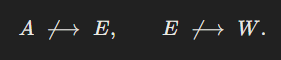
An agent cannot rewrite the fundamental invariants E.
The structure E cannot “cancel” the primary will W.
Thus:
the local is always constructed from the natural, but the natural is never constructed from the local.
This constitutes the ontological basis for why adaptive systems are always embedded into a larger order that they do not control.
2.5. Structural Dominance and the Premise of Drift
Let: E_t — the state of the environmental structure over time;
the actions of the agent must be based on its internal model.
If E_t evolves according to its own dynamics (is non-stationary), and the actions A_t and internal models have limitations and adapt slowly, then, eventually, the behavior of the agent becomes less and less aligned with the structure of the environment, or the agent collapses.
Put simply: in the long run, the environment plays the decisive role; local agents either adapt or disappear.
This is the ontological foundation of the law of drift.
3. Structural Level: The I²C Law
3.1. Three-phase structure of behavior
Any goal-directed action of an adaptive system can be decomposed into three phases.
Impulse — the impact of the environment on the system.
Interpretation — the internal processing of the impulse.
Coherence — the selection of an action that brings the system into alignment with reality.
Formally: i_t, z_t, a_t,
where:
i_t : impulse — a signal, event, or influence (E_t → A_t).
z_t : interpretation — how the system encodes, classifies, and evaluates the impulse.
a_t : action — a choice that typically reduces the mismatch between the internal model and the external situation.
3.2. Why impulse always comes first
From the embedding A ⊆ E:
first, the structure of the environment E_t induces change,
it reaches the system in the form of an impulse i_t,
then the agent interprets it as z_t,
and only after that selects an action a_t.
The I²C law.
Any adaptive behavior unfolds in the following order:
Impulse → Interpretation → Coherence
This sequence is not merely a convenient diagram; it is grounded in the ontological asymmetry W → E → A: the world always “moves first”.
4. Dynamic Level: The Law of Drift
4.1. Coherence and drift
Let:
x_t — the state of the system over time.
c_t — an internal anchor: a model, a center, a reference.
Let C(x_t,c_t) ∈ [0,1] — a coherence functional (how well the state corresponds to the center).
Then drift is defined as follows:
D_t = 1 − C(x_t,c_t)
D_t ≈ 0: the state is well aligned with the model.
D_t ≈ 1: the coupling between the model and reality is almost completely destroyed.
4.2. Drift Theorem
Postulate. The environment E_t is non-stationary: its structure and parameters change over time.
Condition. The internal model is not updated:
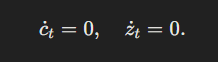
Then:
The expected coherence C does not increase over time, and drift D_t either grows monotonically or, at the very least, does not decrease.
In the limit:
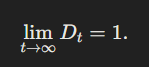
The Law of Drift.
In a non-stationary environment with a static internal model, drift D_t inevitably tends toward one, while coherence C_t tends toward zero.
This is not a technical defect, but a structural consequence:
E_t evolves (W → E).
The values A_t and c_t are limited. Mismatch increases if the model does not adapt.
The only way out:
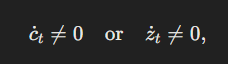
active recalibration of the internal model and its interpretation.
5. Attention, Will, and the Self
We now consider the relationship between ontology, structure, and subjective experience.
5.1. Attention as localized will
Attention can be understood as a local manifestation of will, refracted through the structure of consciousness.
Its core characteristics are as follows.
Attention does not feel — it illuminates.
By itself, it contains no content. It determines what will be perceived, processed, and included in interpretation.
Attention is not the Self.
It is a localization instrument: where to direct resources, not the subject that experiences them.
Attention is a vector.
At every moment in time:
Attention_t = direction of localized will
A shift of attention is a reorientation of localized will.
Formally:

Connection to I²C: Impulse i_t attracts attention (E_t → A_t).
Attention determines which fragment of reality will be interpreted.
Interpretation establishes semantic structure.
Action closes the loop.
5.2. The Self as a state of coherence
Intuitively, the concept of the Self is often understood as:
an object (soul, substance), a structure (self-model, set of properties),
or an illusion (a byproduct of information processing).
UTAM proposes a different view.
The Self is not an object and not a fixed structure, but a state of coherence between will, attention, interpretation, and action at a given moment in time.
Let: Self_t ≈ C(Volition_t, Attention_t, Interpretation_t, Action_t)
Then: When will, attention, interpretation, and action are aligned, the level of Self_t is high — we experience a strong, integrated sense of self.
When they fragment or contradict one another, Self_t collapses — selfhood dissolves, and an inner split is experienced.
This explains: fluctuations of self-experience throughout the day, states of “presence” and “disconnection”, depersonalization, burnout, and the feeling that “life does not belong to me” as regimes of low coherence.
6. UTAM: Axioms and Consequences
6.1. UTAM axioms
Axiom 1. Will is primary.
All directed change is a manifestation of primary will W, not a byproduct of structure.
Axiom 2. Nature is structured by will.
The laws of nature and environmental invariants E are forms of manifestation of W through structuring:
E = S(W)
Axiom 3. The agent is embedded in nature.
Actions A represent a local realization of W within E:
A = L_E{(W)}, A ⊆ E.
6.2. Consequences of UTAM
Consequence 1. Directionality has an ontological foundation.
Directed behavior does not reduce to a random combination of reactions; it reflects the chain:
W → E → A → I²C.
Consequence 2. Drift is inevitable.
If E_t evolves, A_t and the internal model are limited, then mismatch accumulates:
D_t = 1 − C(x_t, c_t) → 1 without active recalibration.
Consequence 3. The Self is dynamic, not static.
The Self is not a fixed entity, but a coherence regime.
It strengthens when components are aligned.
It weakens or disappears when coupling breaks.
The value Self_t may vary over time and does not need to be permanently “on”.
Consequence 4. Coherence requires energy.
To maintain a high value of C_t in a non-stationary environment, a system must:
- measure mismatch D_t,
- update models c_t and interpretations z_t,
- consume resources (energy, computational capacity, attention).
Consequence 5. Meaning = a stable regime of high coherence.
In UTAM, meaning is not an abstract idea, but:
a stable correspondence over time between local will, environmental structure, and action.
High C_t over extended periods leads to a sense of meaning.
Growth of D_t and decline of C_t lead to a sense of meaninglessness and disintegration.
Thus, we connect: ontology (will), dynamics (drift), subjective experience (meaning / meaninglessness).
7. Connections to Existing Theories (brief)
7.1. Philosophy of consciousness
Cartesian dualism (Descartes).
UTAM avoids the division between a “substantial soul” and the body: the Self is not a substance, but a regime of coherence.
Empiricism and bundle theory (Hume).
Instead of a “bundle of perceptions without a center,” UTAM introduces a center as a state of coherence of components.
Self-model theory (Metzinger).
Similarity: the Self is not a mystical entity.
Difference: for Metzinger, the Self is an illusion produced by a model. In UTAM, the Self is a real (although dynamic) state of coherence.
7.2. Phenomenology
Intentionality (Husserl).
“Consciousness is always about something” → directionality.
In UTAM, this is linked to localized will (attention).
Being-in-the-world (Heidegger).
Dasein is structurally embedded in the world.
In UTAM, this is formalized as A ⊆ E.
The body-subject (Merleau-Ponty).
The Self is not an abstract mind, but an embodied being.
In UTAM, the Self emerges at the intersection of will, attention, interpretation, and action — always embodied and situational.
7.3. Psychology and neuroscience
Global Workspace Theory (Baars).
Consciousness as global information integration → analogous to high values of C_t.
Integrated Information Theory (Tononi).
Φ as a measure of integration. UTAM introduces C_t as a measure of coherence — similar in spirit, but with an emphasis on directionality and will.
Predictive processing / Free Energy Principle (Friston).
Free energy minimization ↔ reduction of mismatch.
The law of drift becomes a general law of mismatch accumulation under a static model.
7.4. Existential meaning
Frankl (logotherapy).
Meaning as a human response to the demands of reality.
UTAM offers a structural formulation: meaning = a regime of alignment between will and the structure of the world.
Sartre, existential phenomenology.
“Existence precedes essence”.
In UTAM, the Self is likewise not fixed; it is reconstructed each time as Self_t.
8. Empirical implications (operational hypotheses)
UTAM remains a metaphysical framework (will W is not measurable), but it nevertheless allows the formulation of operational hypotheses that can be empirically tested.
8.1. Fluctuations of self-awareness
If:
Self_t ≈ C(Volition_t, Attention_t, Interpretation_t, Action_t),
then, under experimental disruption of coherence (for example, excessive cognitive load, multitasking, or conflicting goals), the subjective sense of “self” and “presence” should decrease.
Test.
Compare self-reported “self-awareness” with the results of manipulations that affect task coherence.
8.2. Deviation from norm and loss of meaning
If the sense of life meaning is associated with persistently high values of C_t, then as drift D_t increases, the subjective sense of meaningfulness should decline.
Test.
Longitudinal tracking of alignment or misalignment between expectations and actual outcomes (indicator D_t) and self-reports on scales of meaning / meaninglessness.
8.3. Attention as localized will
If attention is localized, then its direction should strongly correlate with brain regions involved in movement planning and action selection (premotor and fronto-parietal networks).
Test.
fMRI / EEG studies of voluntary attention and activity in regions responsible for movement planning.
These hypotheses do not prove the metaphysics of UTAM, but serve as a bridge to empirical science.
8.4. Self-model theory (T. Metzinger, 2003)
I chose to consider self-model theory in a broader sense, as one of the most influential contemporary theories of self-consciousness.
Both UTAM and SMT reject the concept of a fixed, substantial “self,” treating selfhood as a dynamic mode of integration of multiple processes — cognitive, affective, sensory, and volitional. In both theories, the self can strengthen, weaken, disappear, or blur depending on the coherence of internal processes.
However, these approaches differ in their treatment of will.
In self-model theory, will is an epiphenomenon: the result of interactions between internal representations, motivational cycles, and automatic brain mechanisms. It has no ontological status and does not exist “in itself”.
In UTAM, will is treated as an ontological operator of directionality — the primary cause of adaptive action. Local agent will is a refraction of primary directionality through the structure of consciousness and the environment.
This allows UTAM to reinterpret the dynamics of self-consciousness.
Self_t is not merely a “transparent self-model” (as in SMT), but a regime of high coherence between will, attention, interpretation, and action, embedded in the dynamics of drift.
I arrived at UTAM not through pure metaphysics, but through an analysis of how coherence functions as a semantic force in adaptive systems. In this sense, UTAM extends SMT by adding ontological directionality (will) and dynamic structure (drift), which in SMT are present mainly in descriptive form.
9. Discrete dynamics: drift and its antagonist
In the previous sections, we showed that drift D_t represents a fundamental dynamic of mismatch between the system state x_t, the internal model c_t, and the structure of the environment E_t.
However, drift alone is only half of the equation of adaptive life. To complete the picture, it is necessary to show:
why an antagonist to drift is required,
what the force of this antagonist is,
and why this follows inevitably from the ontology of UTAM.
This answers the main logical question that arises for any reader after encountering the “Law of Drift”:
If drift is a ubiquitous phenomenon, how can any system sustain itself at all? Why does the world not collapse instantly?
A full explanation is given below.
9.1. Counteracting drift as adaptation
From the definition:
D_t = 1− C(x_t,c_t),
To reduce D_t, we need:
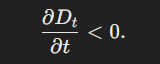
This is possible only if:
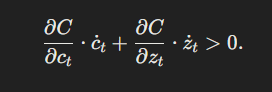
That is:
a change of reference points (models),
a change of interpretations.
These are the only parameters that can actually reduce drift.
Neither action A_t nor attention Att_t by themselves can reduce drift if the model and meaning remain unchanged.
Therefore:
Anti-drift ≡ adaptation of the model c_t and interpretation z_t.
9.2. Why counteracting drift is inevitable in UTAM
Given:
will as a primitive (W),
the environment as structured will (E),
the agent as localized will (A),
and drift as mismatch accumulation.
A system that never adapts simply exits the game: drift wins, coherence collapses, and viability drops to zero.
Therefore, any long-lived adaptive system must implement:

over sufficiently long periods of time.
Protection against drift is not an optional feature, but a necessary consequence of UTAM ontology: if directionality exists and the environment evolves, then localized will must maintain recalibration — or disappear.
9.3. Subjective aspect: why burnout, depersonalization, and “life does not feel like mine” lead to the collapse of the anti-drift mechanism
This now becomes clear.
When anti-drift is strong → the model adapts, coherence increases, and a clear Self_t state is present.
When anti-drift weakens → the model stops updating, drift intensifies, Self_t disintegrates, and depersonalization, burnout, and loss of meaning emerge.
Thus:
Depersonalization = weak protection against drift (adaptation is blocked).
Burnout = exhaustion of anti-drift (no energy for adaptation).
“Life feels like it is not mine” = drift outpaces the system’s capacity to adapt.
10. Limitations and open questions
10.1. Metaphysical status
Primary will W is introduced as an ontological primitive. UTAM does not explain:
why it exists, or how it relates to fundamental physics.
Frankly, this lies outside the scope of the theory.
10.2. The hard problem (qualia)
UTAM: provides an operational definition of Self_t, and links meaning to coherence.
However, it does not explain why certain coherence regimes are accompanied by subjective experience, the sense of “what it is like” (Nagel).
10.3. Free will
An open question:
Is the localized function A fully determined by the structure E, or do genuine degrees of freedom exist that cannot be reduced to L_E as a purely deterministic function?
UTAM does not solve the problem of free will; it merely clarifies the question of how localized will is embedded in environmental structure.
10.4. Scope of applicability
The goal of UTAM is to address:
adaptive systems, with internal models, and with feedback.
Extending this to: subatomic systems, purely social structures, modern artificial intelligence systems without an internal subjective layer requires separate analysis.
10.5. Relation to physics
Claim:
W → E
This is a bold and speculative statement. Possible interpretations include:
a connection to quantum indeterminacy, where will can be interpreted as meta-directionality of probability distributions, although UTAM does not require this;
a connection to non-standard cosmological models, where physical laws themselves emerge and evolve, allowing W to be interpreted as a tendency toward structuring prior to law formation;
an understanding of W as a purely metaphysical object with which physics does not need to work directly.
UTAM does not claim that W directly causes physical events in equations. Instead, it states:
physics has its own questions,
philosophy has its own questions,
UTAM addresses the problem of behavioral directionality, which cannot be reduced to physics,
and W is the minimal metaphysical operator that explains it.
Similarly:
phenomenology studies experience,
logic deals with formal structure,
systems theory addresses stability and feedback.
For UTAM to remain coherent, physics does not need to include W in its equations.
Brief summary
W is not a “new physical substance”.
It is an ontological operator of directionality that can be understood in three ways:
as meta-directionality of quantum probability (compatible with modern interpretations of quantum mechanics);
as a pre-law structural principle (compatible with theories of emergent physical laws);
as a purely metaphysical category required by UTAM but not demanding physical instantiation.
Any of these interpretations makes the formula W → E internally consistent and compatible with contemporary science.
11. Biology as evidence: mitochondria, aging, and the Krebs cycle as “drift ↔ adaptation” in ancient organisms
What is described at the level of UTAM (drift → adaptation → energy → coherence) is not an abstraction. Biology demonstrates exactly the same patterns — so clearly that the organism literally appears as a machine designed to maintain coherence against drift as long as sufficient energy is available.
Let us examine this.
11.1. Aging = structural drift of the cell
Organismal aging is an increase in D_t.
Damage accumulates in DNA and proteins.
Repair mechanisms lose efficiency.
The structural coherence of the cell relative to its own “ideal model” declines.
In UTAM terms:
x_t: the actual state of the cell.
c_t: the encoded “normal” state (genetic and regulatory models).
C(x_t, c_t): how close the cell is to this norm.
With aging: C_t decreases, D_t increases.
The cell moves away from its structural center.
11.2. Anti-drift in biology: DNA repair, autophagy, mitophagy, regeneration
Biology responds to drift with an entire arsenal of anti-drift processes:
Anti-drift = DNA repair + autophagy + mitophagy + regeneration.
All of these require energy derived from the citric acid cycle.
Thus:
The Krebs cycle = a biochemical form of anti-drift.
Aging = a biological form of drift.
The organism is, quite literally, a UTAM machine.
Drift constantly increases.
Anti-drift (adaptation and repair) continuously attempts to compensate for losses.
When the anti-drift system can no longer cope, the system collapses.
Mitochondria, as symbionts, represent “subjects within a subject”:
their own dynamics are part of the overall dynamics;
their energy is an instrument of adaptation;
their degradation accelerates death.
Thus, biology provides a very concrete, material illustration of UTAM.
11.5. The organism as a whole as evidence that UTAM is not compositional
UTAM states:

Biology claims:

All of this functions thanks to the Krebs cycle.
Life is a continuous resistance to drift through energy.
Death is the moment when counteracting drift can no longer compensate for structural drift.
This is a direct, non-metaphorical confirmation of the core logic of UTAM.
12. Summary
- Drift is an inevitable source of mismatch.
- The antagonist of drift is adaptation.
- The source of adaptation is primary will.
- The mechanism of adaptation is I²C.
- The result of adaptation is the restoration of coherence.
- Self_t is a peak regime of coherence.
- Loss of selfhood is what occurs when drift blocks adaptation.
12.1. Conclusion: toward a unified theory of adaptive meaning
UTAM integrates three levels.
- Ontological.
- Structural.
- Dynamic.
Against this background:
- Attention is understood as localized will that directs the “beam” of consciousness.
- The Self is a state of high coherence between will, attention, interpretation, and action.
- This implies the existence of a stable regime of this coherence over time against the background of drift.
- It provides a clear language for describing subjective phenomena (self-awareness, presence, meaninglessness).
- It connects them to the dynamics of adaptive systems and drift.
- It builds bridges between practice (mindfulness, therapy, AI development) and empirical research (cognitive and neuroscientific studies).
MxBv
References
Philosophy of consciousness
Descartes, R. (1641). Meditations on First Philosophy (Meditationes de Prima Philosophia).
Hume, D. (1739). A Treatise of Human Nature: Being an Attempt to Introduce the Experimental Method of Reasoning into Moral Subjects.
Metzinger, T. (2003). Being No One: The Self-Model Theory of Subjectivity. Cambridge, MA: MIT Press.
Phenomenology
Husserl, E. (1913). Ideas Pertaining to a Pure Phenomenology and to a Phenomenological Philosophy (Ideen zu einer Reinen Phänomenologie und Phänomenologischen Philosophie).
Heidegger, M. (1927). Being and Time (Sein und Zeit). Halle: Max Niemeyer Verlag.
Merleau-Ponty, M. (1945). Phenomenology of Perception. Paris: Gallimard.
Psychology and neuroscience
Baars, B. J. (1988). A Cognitive Theory of Consciousness. Cambridge: Cambridge University Press.
Tononi, G. (2004). An information integration theory of consciousness. BMC Neuroscience, 5, 42. https://doi.org/10.1186/1471-2202-5-42
Friston, K. (2010). The free-energy principle: a unified brain theory? Nature Reviews Neuroscience, 11(2), 127–138. https://doi.org/10.1038/nrn2787
Existentialism
Frankl, V. E. (1959). Man’s Search for Meaning: An Introduction to Logotherapy. Boston: Beacon Press. (Original work published 1946 as Ein Psycholog erlebt das Konzentrationslager.)
Sartre, J.-P. (1943). Being and Nothingness (L’Être et le Néant). Paris: Gallimard.
Biology
López-Otín, C., Blasco, M. A., Partridge, L., Serrano, M., & Kroemer, G. (2013). The hallmarks of aging. Cell, 153(6), 1194–1217. https://doi.org/10.1016/j.cell.2013.05.039
Smolin, L. (1997). The Life of the Cosmos. New York: Oxford University Press.
Physics
Wheeler, J. A. (1990). Information, physics, quantum: the search for links. In W. H. Zurek (Ed.), Complexity, Entropy, and the Physics of Information (pp. 3–28). Reading, MA: Addison-Wesley.
Heisenberg, W. (1927). Über den anschaulichen Inhalt der quantentheoretischen Kinematik und Mechanik. Zeitschrift für Physik, 43(3–4), 172–198. https://doi.org/10.1007/BF01397280
Author’s works
Barzenkov, M. (2025a). Impulse → Awareness → Coherence.
A unified logic of behavior for any adaptive system — from Schopenhauer to ΔE 4.7.3b.
https://medium.com/@petronushowcore/impulse-awareness-coherence-a-unified-logic-of-behaviour-for-any-adaptive-system-from-cca5707d4a76
Barzenkov, M. (2025b). Structural drift as a fundamental law of adaptive behavior.
https://medium.com/@petronushowcore/structural-drift-as-a-fundamental-law-of-adaptive-behavior-45df913a6fa9
Barzenkov, M. (2025). Unified Theory of Adaptive Meaning.