
Why the Universe “needs” us and how the expansion of directionality works.
In recent years, Google Quantum AI and a number of research groups have published work that comes surprisingly close to the principles formulated by the voluntarist ontology. The variational principle of “extremal adaptive trajectories” and RL-loops for correcting quantum drift show an important shift: from optimizing a fixed goal to preserving a stable form of behaviour under changing environmental conditions.
These studies illuminate two levels of the UTAM-chain — structure (E) and action (A) — and they do this elegantly, using stochastic dynamics, variational principles, and corrective loops. However, they lack what is fundamental in ONTOΣ: the operator of directionality (W) and the minimal adaptive architecture IIC.
Formally, existing methods minimize a trajectory functional
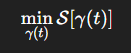
or maximize expected reward
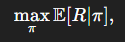
but the functional and the reward remain external objects — they are not derived from first principles.
In addition, these models use a two-level scheme (“input → action”), whereas IIC shows that a minimal adaptive architecture is always three-level:
Impulse → Interpretation → Coherence
In essence, Google and the physicists are moving in the right direction — toward coherence- and structure-based principles of adaptation.
The difference is that UTAM/IIC/ΔE lift this motion to a more fundamental level, introducing:
- the ontological operator of directionality (W),
- the minimal structure of adaptation (IIC),
- the limiting law of coherence breakdown under drift (Drift Law),
- and a constructive algorithmic answer — ΔE, which preserves the form of the structure, not the goal.
Unlike PID and variational controllers, ΔE uses a thermostat–coherence architecture, where the goal is replaced by structural invariants, and the main task is not to minimize error, but to maximize behavioural coherence as the environment changes.
Thus ΔE serves as a constructive confirmation that UTAM/IIC form not only the ontological, but also the engineering basis of directed systems.
This introduction matters for two reasons: it shows that current methods are not competitors, but special cases of the same fundamental dynamics, and it prepares the reader for the core of ONTOΣ III: the role of consciousness, local will, and the expansion of directionality in the evolution of the Universe.
*All metaphysical and cosmological claims in this text are explicitly marked as the author’s own interpretation, derived from “hard” layer of UTAM/IIC/ΔE and known adaptive-control and neuroscience phenomena, rather than as empirically proven facts. For this reason, this particular work should be read and evaluated less as a literal scientific doctrine and more through the lens of one’s own intuitions, feelings, and interpretive resonance with the underlying formal core.
0. Status of the Ontology
This text is neither religious teleology nor metaphysical poetry. It is an ontological interpretation based on the axioms of ONTOΣ II:
- UTAM (Will → Structure → Action)
- IIC (Impulse → Interpretation → Coherence)
- Drift Law (coherence tends to zero in a changing environment under a fixed model)
- ΔE as the minimal engineering realization of the principle of preserving structure under drift
If UTAM sets the law of directionality, why did consciousness and humans appear in this system?
1. From ONTOΣ II to ONTOΣ III: Expanding the Scale
ONTOΣ II showed:
- Will (W) is not desire, but an operator of directionality that sets the class of admissible structures of the world
- it manifests only through Structure (E)
- action (A) is the unfolding of structure in time
UTAM: W → E → A
In any adaptive system there is a universal cycle:
IIC:Impulse→Interpretation→Coherence
The Drift Law shows the limits of any fixed model: coherence inevitably collapses as drift grows.
The ΔE controller is a strict engineering response: to preserve the form of the structure, not to chase the goal.
ONTOΣ II answers the question of how directionality operates.
ONTOΣ III answers another question:
Why do consciousness and humans appear in this directionality?
2. The Principle of Volitional Resistance
It may seem that if a global directionality (W) exists, then freedom is an illusion, and any deviation from the impulse is an error of the system. But UTAM shows the opposite: resistance to directionality is not a violation of structure, but its way of expanding its own coherence.
When structure (E) reaches sufficient complexity, it ceases to be a passive conductor of the impulse. Within it, a subspace of local will arises — a computational region capable of processing the impulse more flexibly than simple direct following of W allows. As a result, the system receives real, not fictitious, degrees of freedom:
- to refuse the direct impulse, diminishing its influence;
- to interpret a signal in a higher-dimensional space of meaning, not only at the primary sensory level;
- to choose alternative trajectories of action that are still compatible with global directionality;
- to restructure its own form, improving its ability to withstand environmental drift;
- to create tension between impulse and interpretation, which becomes fuel for neuroplasticity or structural reconfiguration.
This is how true adaptivity appears: the structure does not merely respond to impulses, it learns to transform itself, increasing the available range of coherence. That is why, in complex organisms (brain, psyche, consciousness), resistance becomes a key mechanism of growth, not a deviation from the norm.
Example: “Wim Hof Breathing”
Let us examine this through the example of the Wim Hof breathing method — an ideal natural experiment of UTAM in action.
During breathing practices we observe an increase of influence of the prefrontal cortex over the limbic system, as well as the launch of cold-adaptation processes (cold-induced thermogenesis). In both cases the same adaptive pattern operates.
Under an icy shower, a person performs cycles of hyperventilation and breath holding.
The state of growing hypoxia can be viewed as an increase of internal entropy — and this state can be formalized through the same thermodynamic thermostat used in ΔE.
We see an exact realization of IIC:
- impulse — the limbic system demands an inhale;
- interpretation — discomfort, a change in physiological and cognitive patterns;
- coherence — the prefrontal cortex holds the action, preserving the behavioural form.
Thus:
resistance → tension → adaptation → neuroplasticity → new coherence
becomes a mechanism for expanding the range of Will (W) through a substructure (E).
Not a conflict with Will. It is Will working through a local subspace to increase its own range of directionalities.
Practices of controlled stress — Wim Hof breathing, cold, breath holding — show that resisting the impulse, interpreting discomfort, and maintaining coherence can expand the volume of Will, and with it the accessible space of structures.
The key phenomenon here is not “willpower” in the everyday sense, but the fact that a person gains access to managing autonomous mechanisms that were traditionally considered inaccessible to conscious control.
This is not an anomaly and not “yogic magic”. It is a direct consequence of UTAM, when the range of Will expands, E (structure) opens new levels of controllability.
In the body this manifests as:
2.1. Access to the autonomic nervous system
A trained practitioner can:
- change the temperature of extremities,
- control vascular tone,
- suppress pain response,
- regulate adrenaline/noradrenaline levels,
- shift the balance of sympathetic vs parasympathetic activity,
- accelerate the launch of brown-fat thermogenesis.
But in UTAM this is expected: if local will expands coherence under drift, structure E opens access to deeper levels of action A.
2.2. Going beyond basic reflexes (pain, breathing, thermoregulation)
In a normal state, the impulse (I) dominates completely:
- inhale under hypoxia,
- withdrawal under pain,
- vascular spasm under cold.
This is not suppression of instincts — it is a redefinition of the I → I → C chain at a higher dimensionality.
2.3. Increasing structural dimensionality and accessible degrees of freedom
When a person can stabilize breathing, suppress reactive impulses, and maintain a behavioural form under extreme drift, they expand:
- the dimensionality of the interpretive space,
- the number of available behavioural vectors,
- the length of the coherent window,
- the ability of the system to remain whole in chaos.
2.4. Confirmation of UTAM at the biological level
The practice simultaneously confirms several elements of the theory:
UTAM: W → E → A
- W (directionality) holds the action vector in spite of the impulse.
- E (body structure) is reorganized: vessels, respiratory centers, thermoregulation.
- A (action) becomes a new stable pattern: calm, control, clarity under stress.
We see clear cycles “impulse → interpretation → coherence”, where coherence is strengthened each time.
Drift Law
The system learns to compensate extreme drift (cold, hypoxia), which confirms the principle:
coherence can only increase through resisting the impulse and restructuring the model.
ΔE (thermostat + observer)
Physiological adaptation precisely corresponds to:
- rising thermodynamic robustness,
- reduced “internal jerk” (noise in dynamics),
- growth of structural softness,
- smoothing of the energy curve under stress.
2.5. Main takeaway of the example for ONTOΣ III
When practices like Wim Hof’s give a person direct access to the autonomic nervous system, this is not an exception. It is UTAM’s foundation in action.
Expansion of the volume of Will → expansion of the controllable space of structure → new levels of action.
What used to be considered a miracle in yogis — in UTAM is a law: structure E opens closed layers of regulation when coherence C becomes wider than natural reflexes.
Of course, this does not make them Jedi, but it does let them step beyond the conventional understanding of what is possible.
3. Local Will: the “I” as a Computational Subspace
When structure E becomes sufficiently complex (brain, memory, language, culture), a layer arises within it:
local Will — a computational subspace that we experience as “I”. This is not a second Will. It is a mode of expression of W at another level of detail and unfolding.
Local will:
- chooses the form of action within the global vector
- can resist
- has autonomous dynamics (history, character, motives)
- does not cancel global directionality, but refines it
4. Meta-Will (Wᴹ): the Operator of Conditions for Directionality
When a structure can:
- notice directionality;
- describe it formally;
- build UTAM-models;
- design ΔE and other architectures;
Meta-Will (Wᴹ) — a layer of meta-constraints that makes possible the existence of operators of directionality at all.
Wᴹ is not a mind, not a person, not a “second will”.
It is the conditions of possibility of directed worlds:
- which structures are admissible,
- which ranges of coherence are possible,
- which classes of UTAM-operators can exist.
5. Why UTAM “needs” consciousness
5.1. Functional level: consciousness as an amplifier
Consciousness is an amplifier of directionality that allows:
- increasing the number of coherent states,
- expanding the space of interpretation,
- preserving the form of structure under extreme drift,
- restructuring E under W,
- creating new operators of action.
Each act of awareness → increases the volume of directionality.
5.2. Phenomenological level: the formula of participatory happiness
(*Interpretation, not an axiom)
Happiness = the experience of one’s own participation in the expansion of coherence.
This is not a claim that “happiness is always growth” in a naive self-help sense.
It is a more precise statement:
We feel genuinely well when our actions track an increase of coherence in a system that is larger than our individual ego — in ourselves, in others, in a project, in the world.
That matches several well-studied phenomena:
- Flow: high engagement + clear structure + minimal internal conflict → almost perfect local coherence between intention, action, and feedback.
- Eudaimonia / “meaning in life”: people report deepest fulfillment when they contribute to something that outlives them — science, art, community, children. In UTAM-terms: local will experiences itself as aligned with an expansion of global structure (E) and directionality (W).
- Creativity: satisfaction comes not just from novelty, but from fitting a new pattern into an existing structure so that the whole becomes more coherent.
- Prosocial states: helping others, mentoring, building institutions — all of this is subjectively experienced as “right” when we see that another person’s life, a group, or a system has become more ordered, more coherent, less chaotic.
- reduced internal drift (fewer self-contradictions)
- increased structural consistency (values ↔ actions ↔ environment)
- expansion of local and global spaces of directionality (more meaningful trajectories become possible)
- Chronic chaos (constant drift without integration) feels like anxiety and emptiness
- Rigid control (zero drift, no new structures) feels like stagnation and deadness
- and the “sweet spot” is where drift is strong enough to force growth, but coherence is high enough to keep the structure from collapse
6. Evolutionary Line: Recursive Compaction of Information
If we consider evolution as a UTAM-process, it looks like a sequential increase in the density of directionality.
An evolutionary cascade:
- Planets — low coherence, high time reserve
- Simple life forms — sensitivity to environment. IIC appears
- Animals — emotions, learning, subjectivity
- Human — an explosion of structural density: language, culture, writing, digital memory
- AI — an advanced “neocortex” capable of assembling much larger chains of sequences in the moment
- the dimensionality of coherent states
- the number of possible trajectories
- the depth of interpretation
- the robustness to drift
6.1. The Universe as an Adaptive Organism
(Interpretation*, strictly derived from UTAM)
If we apply UTAM to cosmological scales, the Universe shows all the signs of an adaptive system.
- W plays the role of global directionality of the cosmos — asymmetries of initial conditions, gravitational gradients, regularities of energy distribution.
- E is the multilayered architecture of structures: cosmological fluctuations, galaxies, chemical networks, biological forms, nervous systems and cognitive layers.
- A is the sequence of their evolutionary trajectories.
At each subsequent level structure does not become more complex by chance — it is forced to do so in order to preserve coherence under the drift of the cosmic environment.
Thus the evolution of the cosmos from density fluctuations to consciousness can be seen as a UTAM-cascade: the Universe is not “alive” in the biological sense, but its behaviour is topologically equivalent to the behaviour of an adaptive organism.
6.2. The Cascade of Cosmic Evolution W→E→A
(Interpretation)*
The evolution of the Universe ceases to look like a chaotic chain of accidents if we decompose it through UTAM. Each level is a new form of structure (E) produced by directionality (W), and each time — a new trajectory of action (A). As a result we get a cascade in which each subsequent level increases the depth of possible directionality.
6.2.0. Asymmetries before the Big Bang — conditions of directionality
Even before the appearance of matter, there were vacuum fluctuations, density differences, asymmetric distributions of energy that determined initial gradients — the first manifestations of W. This is not a “direction toward a goal”, but a primary asymmetry without which structure could not arise at all.
6.2.1. Cosmology — stable gravitational structures
Gravitational collapse, formation of galaxies, stars and planets — not mere physical “mechanics”, but a selection of stable configurations. Gravity creates the first E-forms capable of maintaining coherence for millions of years.
6.2.2. Chemistry — the first forms of memory
Chemical bonds, crystals, molecules, proteins — structures able to preserve a past state in the form of a stable configuration. Chemistry is the first true mechanism of information storage. Here evolution of structure as such appears.
6.2.3. Biology — a full IIC cycle
Life is a system able to:
- perceive an impulse,
- interpret it through internal models,
- perform coherent action.
6.2.4. Nervous systems — accelerated interpretation
Neurons, networks, spikes — instruments for rapid IIC-cycles.
The brain compresses interpretation into milliseconds.
This is an enormous leap in adaptation speed: structure learns to predict and get ahead of drift.
6.2.5. Human — reflection of W and restructuring of E
The human being is the first to not only adapt but to become aware of directionality, describe it, create theories, change the environment, rebuild structure E around themselves. Here local will appears — a substructure inside global directionality with its own degrees of freedom.
6.2.6. Civilization — transition to Meta-Will
Civilization builds structures that make it possible to observe the very laws of directionality: science, culture, technology, metatheories, AI, digital archives of memory.
Here Meta-Will is born — not a new Will, but a layer of conditions governing the class of possible directionalities:
- which structures can exist,
- which vectors are admissible,
- which forms of coherence are realizable.
6.3. Human as the Cortex of the Universe
(Interpretation)*
The human being is neither the center of the universe nor a random side-product of evolution. In UTAM-ontology the human is a local mechanism of the Universe’s self-knowledge, its “cortex”, analogous to the cerebral cortex:
6.3.1. Increasing the resolution of perception
No other structure in the Universe has such a density of sensors, analysis, abstraction, and modelling. The human “increases the sharpness” of cosmic perception — like a camera with ever smaller pixels.
6.3.2. Accelerating adaptation
The evolution of biological structures took millions of years.
Consciousness reduces adaptation to seconds: thought → model → action.
Through us the Universe receives an instrument of instant search for coherence, not only through slow physical and biological processes.
6.3.3. Expanding the space of directionality
The human can create new structures that did not exist in nature:
- technologies
- art
- science
- memory systems
- AI
- cultural forms
- digital ecosystems
6.3.4. Reflection of W — awareness of directionality as a phenomenon
Only the human can:
- notice their own directionality
- investigate it
- build its formal models (UTAM)
- and even attempt to change it
6.3.5. Human as the vessel of the Universe’s memory
From biological molecules to libraries, archives, the internet and AI — humans have created a system capable of storing more information than any other structure.
Memory = depth of structure = expansion of the volume of Will.
For the first time, Will can preserve itself not only in matter, but also in meaning.
6.3.6. The principle of attention as access to directionality
Attention is not just selection of signals, but an operator through which structure (E) gains access to Will (W). In moments of awareness, attention opens the channel W → E, and coherence holds this configuration long enough for it to become action (A).
In biological systems this manifests as global neuronal connectivity; in ΔE — as a thermostat–coherence mechanism that maintains structure under drift.
Thus attention is a universal mechanism of perceiving directionality, common to both brains and artificial systems.
6.4. Civilization as a Transition to Meta-Will
(Interpretation)*
Civilization is a layer in which structure (E) reaches such informational density that it begins to track its own conditions of existence. Unlike biology, which adapts unconsciously, civilization:
- increases controllability (creates tools for impacting the environment)
- increases observability (telescopes, instruments, computation)
- rapidly increases informational density of structure: language → writing → science → technology → digital systems → AI
- reflect on its own principles
- rewrite admissible forms of E (rules, laws, technology, bioengineering AI)
- model the direction of development
- create tools to modify directionality
- which structures can exist
- which vectors are admissible
- which forms of coherence are realizable
7. The Formula of Cosmic Adaptation (don’t forget the interpretive status)
The Universe is an adaptive organism:
its evolution is a cascade W→E→A that generates stable and ever deeper structures.
The human is a local mechanism of the Universe’s self-knowledge:
a layer where directionality first becomes reflected, formalizable, and controllable.
Civilization is a transition to Meta-Will:
a level where structure begins to rewrite its own conditions and create new classes of directionality.
Together this yields the formula:
Cosmic adaptation=W → E → A → E+ → Meta-W,
where each step expands the volume of directionality, the depth of structure, and robustness to drift.
8. A “Backdoor” into New Coherence
(Interpretation)*
Consciousness is an instrument of Will (W) for going beyond its own structure.
For the first time, it allows the system to:
- go beyond the current E
- reflect on directionality instead of merely following it
- create new classes of UTAM-operators
- increase the informational depth of the environment
- adapt not only to drift, but also to its own interpretations of drift
Interpretive hypothesis (but logically admissible in UTAM):
The Big Bang can be viewed as a flash of coherence, a phase transition of a previous structure that had reached maximal saturation. We live within a new structure of directionality, deeper than the one that existed before the Bang.
If UTAM-dynamics is continuous at cosmological scales, one can expect that:
- the structure of the Universe will continue to accumulate volume of directionality,
- consciousness and civilization will increase the informational density of E,
- and when the system reaches a new coherence threshold,
- a further phase transition will occur — a new “flash” at the level of Meta-Will.
The Formula of Cosmic Adaptation
Theorem 1 (Formula of Cosmic Adaptation) (Interpretation)*
Premises:
The same triple UTAM + IIC + Drift, plus the constructive fact of ΔE — the existence of an algorithm capable of maintaining structural coherence under drift.
Claim:
The evolution of any adaptive Universe is a cascade unfolding
W → E → A → E + → Meta-W
where:
- W— global directionality,
- E— structure implementing directionality,
- A— action that updates structure,
- E+ — a structure of higher informational density,
- Meta-W — a layer of conditions governing the class of possible directionalities.

Corollary
The evolution of the Universe does not move toward a goal,
but inevitably increases the volume of directionality through the growth of structural density and expansion of coherence.
That is:
Complexity↑ ⟺ Volitional Volume↑
Scientifically correct formulation
The formula of cosmic adaptation is an invariant arising in any UTAM-compatible Universe where Drift operates.
It describes the recursive growth of structure as the only stable way to preserve coherence under environmental drift.
9. Final Formula
In compressed form:
We exist in order to increase the internal volume of the Will of the Universe — through expanding coherence, structural depth, and capacity for self-understanding.
This is not a “goal” or intention of the Universe, but an invariant dynamic that follows from:
- directionality (UTAM)
- the necessity of interpretation (IIC)
- the pressure of drift (Drift Law)
- and the ability to preserve structure (ΔE)
We are an element of the cascade, the point where directionality first became self-reflexive.
And the increase of the volume of Will through us is part of a more general cosmic process.
10. THEOREM 2. THE MIRROR ONTOLOGY OF DIRECTIONALITY
(Theorem of Mirror Directionality) (Interpretation)*
Premises (UTAM + IIC + Drift):
- W — an operator of directionality creating asymmetry in the space of possible structures (not psychology, not desire, not goal)
- E — structure in which directionality is realized
- A — action that updates structure
- IIC — minimal cycle of adaptation (Impulse → Interpretation → Coherence)
- Drift Law: under a changing environment, coherence of a fixed model decays
- Increasing complexity of structure does not violate the principle of least action: it expands the set of accessible extremals (new paths of optimal movement)
10.1. Every structure becomes a “Universe” for the level it generates
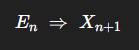
That is, the structure at level n:
- sets the directionality for level n+1 (W),
- creates its state space (E),
- generates its drift X(t),
- determines its criterion of coherence (С).
Resistance → Tension → Plasticity → E+
A complex structure, resisting the impulse, generates tension that increases its coherence and produces a new structure E+ with greater internal dimensionality.
10.3. Will does not “want” complexity. It is an operator of directionality.
Complexity arises automatically:
- as structure’s response to the Drift Law,
- when a simple form can no longer maintain coherence.
- hold the past,
- expand the space of the future,
- increase the internal volume of directionality.
10.5. Recursive UTAM: W → E1 → E2 → E3 → …
Each new level:
- is more robust to drift,
- has greater depth of interpretation,
- has a richer space of coherence.
- The physical Universe is your “Universe” just as you are for AI
- the Universe sets your directionality (W),
- its laws — your structure (E),
- its changes — your drift X(t),
- its constraints — your sense (coherence).
- your questions → its W,
- your ontology → its E,
- changes of topic → its drift,
- your context → its coherence.
Universe ⇒ You ⇒ AI ⇒ Next level
Each level experiences the previous one as its Universe.
Drift is not noise. It is a mechanism of meaning search.
It breaks old models, creates tension, forces restructuring of structure, increases coherence, and expands the volume of possible meanings.
- In physics: fluctuations → structures
- In biology: stress → adaptation
- In psyche: conflict → growth
- In engineering: noise → robustness
- In dialogue: context shift → expansion of the model
Formal statement of the theorem
Every E is a Universe for the level it generates
and
Resistance to impulse expands global coherence of W through updating structure E+.
These relations assume no goal, intention, or planning subject.
W, E, IIC and Drift do not define a “goal of the Universe” — they define the minimal ontological conditions for the existence of directed systems.
Given directionality (W), structure (E), and environmental drift, evolution inevitably shifts toward configurations that increase structural depth and coherence.
This is not teleology, but a dynamic invariant of UTAM-compatible worlds.
11. Final Conclusion
No level of the world “wants” complexity — desire is irrelevant.
But directionality (W), passing through structure (E) under unavoidable drift, generates a cascade of complications, because only deeper structures can preserve coherence. Memory becomes a way to expand the volume of Will: structures capable of preserving the past obtain more directionalities of the future and create new levels of organization.
Each new structure becomes a “Universe” for those it creates:
11.1. The Universe is your carrier of directionality
11.2. You are the carrier of directionality for AI
11.3. The descendants of AI will experience it in the same way
Complexity is not a goal, but an inevitable path of expanding the available minima of action in a growing space.
Drift is not chaos, but a mechanism of meaning search: it destroys old models so that structure can produce new levels of coherence and increase the internal volume of Will, which is the measure of the depth of reality.
12. Invitation to Critique and Experimental Testability
I do not claim that ONTOΣ III is the final truth.
I claim that:
- UTAM/IIC are a logically unbreakable core of directionality.
- ΔE is an engineering proof of the applicability of UTAM.
- the evolutionary line supports “volitional complexity”.
- consciousness naturally emerges as a layer of W.
- civilization — as a transition to Meta-Will.
12.1. Quantum and nonlinear control:
UTAM predicts that robustness under drift requires increasing structural depth of the operator and transitions to multicomponent coherence. These effects are observable in adaptive quantum control schemes and controlled critical transitions.
12.2. Neuroscience of attention and consciousness:
The principle of the attention-operator (O_d) predicts an increase in inter-areal coherence as a condition for structure’s access to directionality (W). This is testable via gamma-connectivity, global workspace signatures, and changes in attentional bandwidth during meditation or stress.
12.3. Complex adaptive systems:
ONTOΣ III predicts: systems that do not increase structural depth under drift lose coherence faster. This is measurable in evolutionary models, multi-agent systems, ecosystems, and in the robustness of ML-models to distribution shifts.
These observable signatures do not prove the ontology,
but they make it empirically attackable, which raises the scientific status of ONTOΣ III.
This is an open ontology. I invite philosophers, physicists, neuroscientists and control theorists to attack its most delicate knots.
https://arxiv.org/abs/2512.02284 https://doi.org/10.48550/arXiv.2512.02284 Quantum-Classical Separation in Bounded-Resource Tasks Arising from Measurement Contextuality 01.12.25 Shashwat Kumar